Queue Craft: Seven Checkout Changes That Keep UK Shop Counters Moving
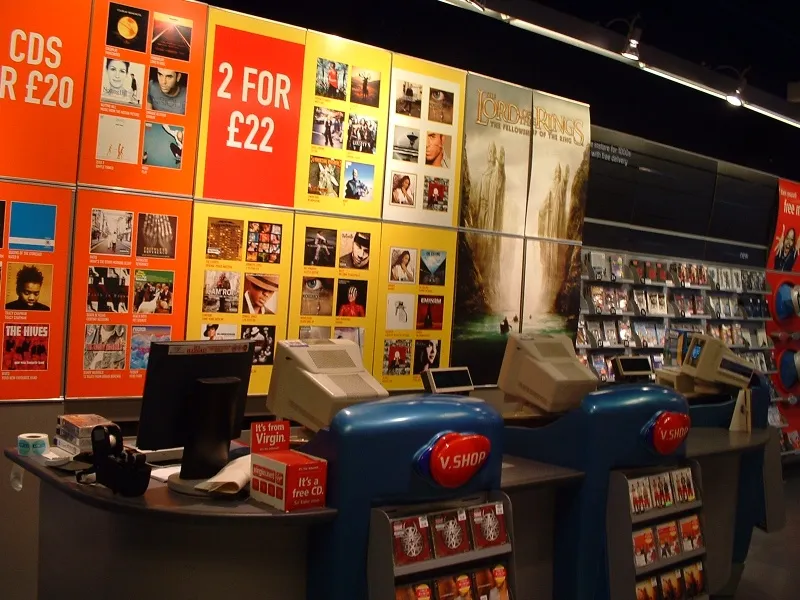
Photo: Unknowndomain, CC0, via Wikimedia Commons
A queue at the counter is where payment flow meets the shop floor. A few seconds lost per customer can turn a manageable lunchtime rush into a visible queue, and a visible queue can prompt a customer to put the basket back. The improvements below are deliberately operational. They are not about negotiating merchant account pricing, but about reducing friction at the point where the card is presented.
1. Put the terminal where the customer's hands already are
A card terminal that sits behind the till or at an awkward angle adds a reach, a turn and sometimes a request to pass the device across the counter. Move the customer-facing terminal so that it is easy to see and reach from the natural position where the customer stands. Check the height, the cable route and the angle of the PIN pad. If the terminal is fixed to a stand, make sure it does not obstruct the bagging area.
Measure the change rather than assuming it works. Time the interval from the last item being scanned to the card being presented for a sample of transactions before and after the move. A modest reduction across a busy hour can be more valuable than a large reduction at a quiet till.
2. Make contactless the default, not a performance
Staff often ask whether the customer would like to pay by card when the more useful question is whether they would like to pay contactless. The £100 contactless limit covers most everyday baskets, and mobile wallet payments are now familiar to many UK shoppers. A short prompt such as contactless or insert reduces hesitation and keeps the terminal moving.
This is not about forcing a payment method. If the basket is above the limit or the customer prefers Chip and PIN, the staff member should move to the correct option without commentary. The gain comes from removing an unnecessary decision at the busiest point in the transaction.
3. Anticipate split payments before the basket is closed
Split payments are a common source of counter delay. A customer may want to pay part in cash and part by card, use two cards, or redeem a gift card alongside a card payment. If the till is finalised before the split is discussed, staff may need to void the transaction and start again.
Train staff to ask a short question when a split seems likely, and make sure they know how the point-of-sale system handles multiple tender types. Test the process with a dummy transaction so that the steps are familiar before a queue forms. Monitor void rates for split baskets; a high void rate usually points to a process problem rather than a customer problem.
4. Simplify receipt handling
Printing a receipt by default adds paper, time and a small but repeated interruption. Ask whether the customer would like a receipt, and offer a digital receipt by email or text where the system supports it. Keep printed receipts available for customers who need them, particularly where returns or expenses require proof of purchase.
A simple script works better than a long explanation: receipt by email, text or print. If the customer asks for a VAT receipt, staff should know how to provide one without leaving the till. Measure the receipt opt-in rate and the time saved at the counter over a representative week.
5. Build a visible offline fallback routine
Network or terminal outages are rare, but they are disruptive when they occur. A fallback plan should be written down and known to staff rather than improvised during a queue. Check whether the terminal supports store-and-forward or offline authorisation, what floor limits apply, and which member of staff can authorise a manual process. Confirm the acquirer's rules before relying on any offline mode.
Keep a short outage checklist near the till: check the connection, switch to the backup route if available, record the transaction details and tell customers what is happening. Test the routine at a quiet time so that staff are not learning it in front of a queue. Review any outage afterwards and note how long it took to restore normal service.
6. Give staff short, consistent scripts
Scripts reduce hesitation without making service feel robotic. Short phrases such as contactless or insert, would you like a bag, and receipt by email or print give staff a consistent starting point. For split payments, a simple question about whether the customer would like to use one card or split the payment can prevent a late change.
Brief the scripts at the start of a shift and review them after peak periods. The aim is not to script every interaction, but to remove the small pauses that occur when a staff member has to decide how to phrase a routine question.
7. Measure the counter, not just the queue
Queue length is visible, but it is a lagging indicator. Track a few simple measures: average time from first item scanned to payment completed, queue length at peak times, abandoned baskets, void rate, payment failures and receipt opt-in. A sample of twenty transactions a week is enough to show whether a change has made a difference.
Change one element at a time and give it a fair trial. If terminal placement is adjusted, do not also rewrite the receipt script on the same day. The value of measurement is that it shows which fix is actually moving the counter, rather than which fix feels busiest.
Checkout improvement is iterative. A shop counter that moves smoothly is usually the result of several small operational decisions, not a single large investment.