The Counter in Your Pocket: A Commercial Assessment of Tap to Pay on Mobile for UK Merchants

Photo: Gerald England, CC BY-SA 2.0, via Wikimedia Commons
SoftPOS — the use of a smartphone or tablet as a contactless card acceptance device — has moved from novelty to a credible option for many UK SMEs. Tap to Pay on iPhone and equivalent Android services allow a supported handset to accept contactless cards and mobile wallets without a separate terminal. For a market trader, a pop-up operator or a small shop with a secondary counter, that can be genuinely useful. For a fixed retail site with high transaction volumes, the commercial and operational case is less clear. The difference lies less in the technology than in the fees, evidence trail and controls that sit behind it.
What softPOS changes, and what it does not
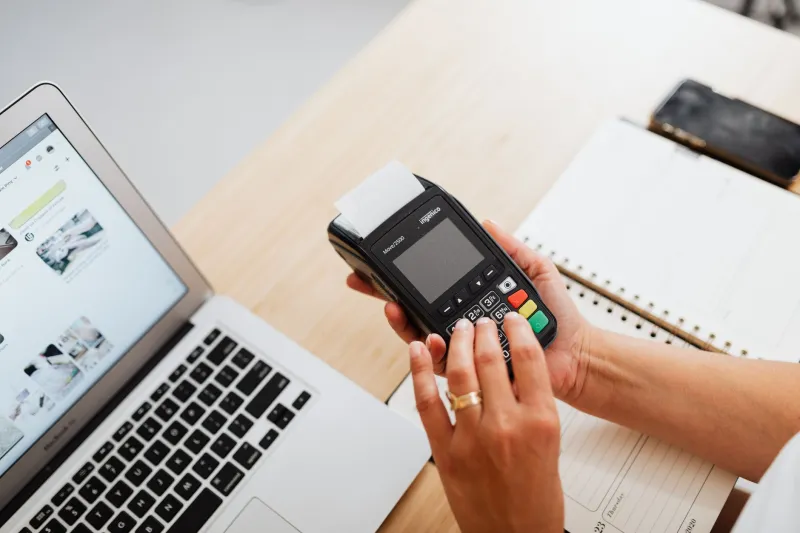
SoftPOS changes the hardware layer. Instead of a dedicated countertop terminal, the merchant uses a supported phone or tablet running an approved payment application, with the acquirer or payment provider processing the transaction. It can shorten onboarding, reduce counter clutter and allow acceptance at the point of sale rather than at a fixed till.
It does not change the underlying card scheme rules, the merchant’s chargeback exposure, VAT record-keeping duties or PCI DSS obligations. A face-to-face card payment remains a face-to-face card payment whether the card is tapped on a terminal or on a handset. Merchants should therefore assess softPOS as a different delivery model for card acceptance, not as a lighter regulatory regime.
The fee line is rarely the whole cost
The headline rate matters, but it is not the whole commercial picture. A softPOS service may combine a percentage transaction fee with a monthly platform charge, a per-transaction fixed fee, a charge for refunds, a chargeback fee or a minimum monthly billing threshold. A traditional terminal may carry a rental or lease cost, a gateway fee and a separate PCI compliance charge. The two models are not directly comparable unless the merchant models the effective rate at its typical basket size.
Fixed fees weigh more heavily on small baskets. A percentage-only rate can look competitive on a £60 transaction and less so on a £5 transaction once a fixed element is added. Market traders and pop-up operators should test the pricing against their real mix of transaction values, including refunds and low-value card payments. They should also confirm settlement timing: faster access to funds can be worth more to a cash-constrained business than a small difference in the headline rate.
Receipts, records and the customer experience
A phone-based acceptance model does not remove the need for proper receipts and records. UK merchants should be able to issue a VAT receipt where required, retain a transaction reference and reconcile takings to the bank. Many softPOS apps send receipts by email or text message, which is practical for pop-ups but depends on the customer providing an address or number. A paper receipt may still be expected in some settings, and the merchant should decide whether a small Bluetooth printer is justified.
Record-keeping should not rely solely on the app’s transaction history. Merchants should export or integrate data into their accounting records, retain evidence of refunds and keep a daily reconciliation note. For a market stall or mobile operator, a simple end-of-shift record of device, staff member and takings can be as important as the payment app itself.
Chargeback exposure and the evidence trail
SoftPOS transactions are card-present, but that does not make them immune to disputes. A customer may still raise a chargeback for an unrecognised transaction, a duplicate payment, a refund not received or a service dispute. The merchant’s ability to defend the transaction depends on the quality of its evidence: the transaction log, device identifier, staff user, time, location, amount, customer receipt and any delivery or service record.
A shared handset with no user accounts weakens that trail. So does a personal phone used for business without proper controls. Merchants should use business-owned devices where possible, require individual logins and retain transaction records in a format that can be exported. Chargeback fees and the time cost of responding should be included in the commercial assessment, not treated as an unlikely extra.
PCI scope and device hygiene
The PCI burden may be reduced by using a provider’s approved softPOS application, but it is not eliminated. The merchant still has responsibilities for device security, access control, software updates and the safe use of the payment app. A phone used for card acceptance should have a passcode or biometric lock, current operating system updates and no unauthorised modifications. It should not be shared casually with staff or used to store card details in notes, photographs or messages.
Merchants should ask the provider how the service is covered under PCI DSS, whether the app is attested for softPOS use and what happens if a device is lost or stolen. Remote wipe, user deactivation and clear procedures for reporting a lost handset are practical controls, not optional extras.
Staff controls for pop-ups and market stalls
In a small team, controls can be informal without being careless. Refund and void permissions should be restricted to nominated staff. Each user should have a separate login where the app supports it. At shift handover, the device should be counted, charged and reconciled against transactions. If a device is taken off-site, the merchant should record who has it and when it returns.
Training should cover the customer journey as well as the technology: how to present the phone, how to handle a declined card, how to issue a refund and what to do if the connection drops. A customer is more likely to trust a phone-based payment if the staff member appears practised and the receipt process is clear.
A checklist for market traders, pop-ups and small shops
- Confirm that the handset model and operating system are supported by the provider.
- Compare the effective cost at your typical basket size, including refunds and chargeback fees.
- Check settlement timing and how transactions appear on your bank statement.
- Confirm how VAT receipts are issued and retained.
- Set up individual user accounts and restrict refund permissions.
- Use a business-owned device with a passcode, updates and remote wipe.
- Test the service in the places you actually trade, not only in the office.
- Keep a manual record of transactions during any connectivity failure.
- Reconcile takings daily and export records to your accounting system.
- Ask how chargebacks are notified and what evidence the provider can supply.
When a traditional terminal remains the better buy
A fixed terminal can still be the better choice for a busy shop counter with high volumes, integrated EPOS, printed receipts and multiple staff. It may also be preferable where mobile data is unreliable, where customers expect a familiar countertop device or where the business needs a supported replacement and maintenance arrangement. SoftPOS is strongest where mobility, speed of setup and low hardware overhead matter more than counter presence.
For UK SMEs, the sensible approach is to compare softPOS and terminal acceptance on total cost, evidence quality and operational fit. CBS Merchants’ view is that Tap to Pay on Mobile is a useful addition to the merchant toolkit, not a universal replacement for the terminal.